The Doubao GEO landscape has changed: as short videos enter AI recommendations, brands need to rebuild their content systems
Doubao is moving beyond competition centered largely on text-and-image sources toward a multisource content environment involving text, images, video, creators, products and platform ecosystems.
Topics
2Summary
Doubao is moving beyond competition centered largely on text-and-image sources toward a multisource content environment involving text, images, video, creators, products and platform ecosystems.
The conclusion first
A change in Doubao GEO deserves brands’ attention:
For questions with strong commercial intent, such as product recommendations, real-world experiences and local services, short videos, filmed hands-on reviews, creator content and product information are becoming more important.
This does not mean that text-and-image content has stopped working, or that brands should stop media communications and knowledge-article production.
A more accurate assessment is:
|
Doubao is moving beyond competition centered largely on text-and-image sources toward a multisource content environment involving text, images, video, creators, products and platform ecosystems. |
At present, this change mainly affects certain consumer decision-making scenarios within Doubao and its ByteDance ecosystem.
Across the AI search market, high-quality text-and-image content remains brands’ most stable and broadly useful content asset. Official website pages, expert articles, media reports, FAQs, industry reports and structured product information can still serve other AI search and question-answering products. They also remain important sources for Doubao’s in-depth analysis, fact-checking and cross-verification.
Brands should therefore redistribute the responsibilities of different content formats, rather than stop text-and-image content and switch entirely to video:
· Text-and-image content explains facts, reasoning and specialist knowledge clearly;
· Video shows products, processes and real-world situations;
· Creator content provides third-party experiences and users’ perspectives;
· The official website establishes the brand entity, product facts and a credible foundation;
· Product content supports further research and purchasing;
· GEO monitoring determines whether AI actually understands and uses this information.
The real change is not one content format replacing another. Brand content is moving from isolated publishing to coordinated development across formats and platforms, with verifiable information.
1. What exactly is changing in Doubao?
Recent observations from the user side of product recommendation, product review and real-world experience queries reveal a clear trend:
Douyin (TikTok) short videos, real-world footage, product pages and experiences in context are becoming more prominent in some Doubao answers.
This is not a fixed ranking rule announced by Doubao, nor should it be reduced to the claim that Doubao now only recognizes Douyin (TikTok).
A more reasonable explanation is that Doubao retrieves content suited to the current question according to the user’s entry point, question type and task objective.
Doubao’s current privacy policy states that its shopping features are provided by partner platforms, including Douyin (TikTok) E-Commerce and Douyin (TikTok) Life Services. In relevant service scenarios, search or query keywords extracted from user input may also be transmitted. This indicates an established product relationship between Doubao and Douyin (TikTok)’s e-commerce and local services. (See source [1] at the end of this article.)
Public materials from Volcengine also show that the Doubao model family can already interpret objects, actions, imagery and the logic of video content, and produce structured results. Video is therefore evolving beyond an external link that users must choose to open into an information medium that models can analyze and organize. (See source [2] at the end of this article.)
This means the best source material for a Doubao answer may vary from one question to another.
|
Type of user question |
What the user actually needs |
Best-suited content formats |
|
Which brand is worth buying? |
Relevant brands, reasons to choose them, strengths and weaknesses |
Recommendation articles, media content and creator reviews |
|
Is the product actually good to use? |
The usage process and actual results |
Short videos, hands-on tests and experiences in context |
|
What is the difference between A and B? |
Specifications, principles and selection criteria |
Comparison articles, official website information and tables |
|
Where does the brand sit in the market? |
Company capabilities, positioning and market evidence |
Official website, media and industry sources |
|
What would it look like in my home? |
Spatial proportions, dimensions and actual use |
Videos in real settings and project images |
|
Where can I buy it? |
Product, store and service information |
Product pages, store pages and platform content |
|
How do I choose a particular material? |
Specialist knowledge and risk assessment |
In-depth text-and-image content, FAQs and expert content |
In the past, brands might only have needed articles about which brands were available and which were good.
Now they also need to answer:
· How the product is actually used;
· How it fits into a real space;
· Who it is suitable for;
· Who it is not suitable for;
· Why it is worth recommending;
· What evidence can be seen and verified.
This is the essence of the changing Doubao GEO landscape.
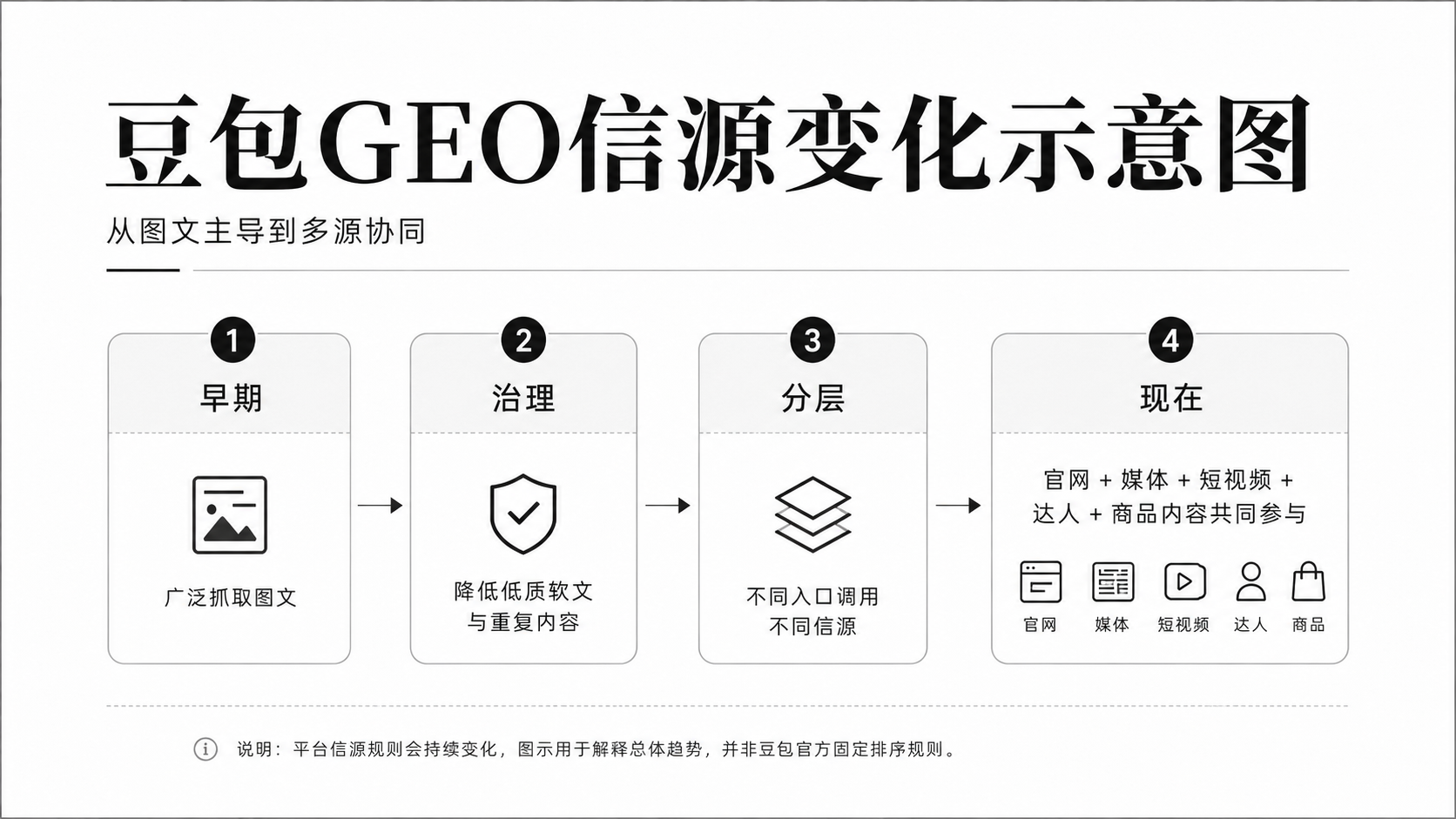
Figure 2. Changing Doubao GEO sources: from text-and-image dominance to coordinated use of multiple sources
2. Text-and-image content still works; its role is changing
Seeing short videos enter Doubao’s recommendation process can easily lead to a mistaken conclusion:
|
From now on, Doubao GEO only requires video production. |
That conclusion does not hold.
Video’s strength is its immediacy, but it cannot carry every kind of information.
A video lasting a dozen or several dozen seconds can show the dimensions of an extended dining table, how much a mattress transfers movement when someone turns over, or how a floor washer cleans along a wall. It is much harder to fully explain company background, technical principles, material standards, after-sales policies and complex purchasing decisions in that time.
Text-and-image content has complementary strengths:
· Higher information density;
· Clearer logical relationships;
· Specifications and facts that are easier to verify;
· Greater suitability for retrieval, extraction and citation;
· Easier development of brand knowledge assets that can be updated over time;
· Use across multiple AI platforms, without dependence on a single content ecosystem.
The right approach is therefore to assign content roles according to the question, rather than replace text-and-image content with video.
|
Content format |
Primary role |
Typical content |
|
Brand’s official website |
Establish brand identity and basic facts |
Company profile, products, credentials, services and case studies |
|
Knowledge articles |
Explain specialist questions and selection criteria |
Material comparisons, buying guides and industry knowledge |
|
Media content |
Build third-party awareness and public information sources |
News, interviews, industry observations and case reports |
|
FAQ |
Address specific questions and decision risks |
Quality, price, after-sales service and suitable users |
|
Short video |
Show processes, results and real situations |
Hands-on tests, usage, comparisons and spatial demonstrations |
|
Creator content |
Provide a third-party perspective on real experiences |
Reviews, venue visits, experiences and product discovery |
|
Product content |
Provide specifications and a path to purchase |
Specifications, models, prices and purchase links |
A mature GEO content system should let each format do what it does best, rather than use one format to address every question.
3. High-quality text-and-image content retains long-term value for other AI systems
Doubao and Douyin (TikTok) share an ecosystem, making short videos and product content particularly valuable in some consumer scenarios on Doubao.
But brands’ GEO work should not focus on Doubao alone.
Users may also learn about a brand through other AI search and question-answering products, traditional search engines, content platforms and specialist channels. AI products differ in their data sources, retrieval methods, content ecosystems and citation practices.
For GEO across platforms, high-quality text-and-image content remains a foundational asset that merits sustained investment.
1. Text-and-image content is better suited to establishing authoritative brand facts
Company name, founding date, core business, product materials, technical construction, certifications and after-sales policies need clear, stable written pages that can be updated over time.
If these facts exist only in video narration, AI has difficulty identifying the latest version and accurately checking information across sources.
2. Text-and-image content is better suited to complex questions
A question such as whether to choose a sintered-stone or solid-wood dining table involves budget, home layout, maintenance, household members and usage habits.
Such questions require a complete analysis, not just a simple conclusion in a short video.
3. Text-and-image content is easier to reuse across platforms
A high-quality knowledge article can be recognized on official websites, in media, on Weixin Official Accounts, by search engines and by different AI question-answering products. It can also be adapted into short-video scripts, FAQs, posters and creator briefing materials.
By contrast, video content that depends entirely on one platform may be constrained by account status, platform permissions, recommendation mechanisms and content lifespan.
4. Text-and-image content still supports cross-verification
Even if AI can understand video, its conclusions still need factual support.
If a video says a material meets a particular standard, corresponding information should ideally be available on the official website, in test documentation or in an authoritative article. If a creator says a brand has a particular technology, brand documentation or public sources should also support the claim.
High-quality text-and-image content is therefore not baggage from an earlier era. It is an important foundation for credible video content.
What needs to go is not text-and-image content itself, but low-quality material that adds no information, provides no real evidence and offers no value to users.
4. Why article-publishing GEO is beginning to hit a ceiling
Many earlier GEO projects followed a very simple process:
Compile keywords, write articles in bulk, publish them in bulk, then test whether the brand appears in AI answers.
This approach could produce some results in the industry’s early days, because many brands had virtually no systematic information online. Adding basic content alone could change how AI understood a brand.
But problems emerged as more teams adopted the same headlines, ranking-list structures and content templates.
Typical low-quality articles may run to over a thousand Chinese characters, yet communicate little more than:
· The brand is strong;
· Its products are high quality;
· It enjoys strong market recognition;
· It is a good choice for consumers.
There may be many articles, but little specific information about materials, craftsmanship, standards, usage scenarios, suitable users or risks.
More seriously, a brand’s official website, media articles, short videos, creator content and product pages are often inconsistent:
· The website emphasizes a mid-to-premium positioning, while videos consistently focus only on low prices;
· A media article promotes a technology that is not explained on the product page;
· Creators use product names that differ from those on the official website and shopping platforms;
· Store counts, founding dates and warranty policies contradict one another across articles.
The brand believes it has produced a lot of content.
To AI, however, that content may describe different entities or contain conflicting facts.
The Cyberspace Administration of China’s April 2026 “Qinglang” special campaign to address misconduct in AI applications included tampering with training data, fabricating authoritative data and malicious marketing using GEO in its measures against AI data poisoning. (See source [3] at the end of this article.)
The dividing line in GEO is therefore becoming clearer:
Compliant GEO helps brands organize accurate information, add credible content, answer users’ questions and reduce AI misunderstandings.
High-risk practices include fabricated data, fake rankings, mass publication of highly repetitive content, disguised promotional reviews and deliberate use of false information to influence AI judgments.
Future competition will be about more than who publishes most: it will favor information that is more complete, credible and easy to verify.
5. Bringing short video into GEO does not mean filming casually on a phone
Producing more short videos does not necessarily improve a brand’s GEO capabilities.
A video with real GEO value should first provide a clear answer, then function as a piece of communications content.
It needs to answer at least six questions:
|
Content element |
What needs to be clear |
|
Brand entity |
Which brand and which product? |
|
User questions |
Which specific question does this video answer? |
|
Usage scenario |
In what space, by which users and under what conditions? |
|
Factual evidence |
Dimensions, construction, materials, operation or actual results |
|
Clear conclusion |
Who it suits, who it does not suit and how to choose |
|
Consistent information |
Do the title, subtitles, narration and visuals align? |
Take filming an extendable dining table as an example.
Low-value content typically circles the product with the camera and adds a line such as ‘the ultimate premium look.’
More useful content would:
1. Measure the actual dining area;
2. Show the table’s dimensions when closed and extended;
3. Film the remaining passage width with the chairs pulled out;
4. Show four-person and six-person dining setups;
5. Explain which home layouts it suits;
6. Explain which households should avoid it.
The first approach evokes a feeling.
The second provides information that helps users decide.
Real-world experience is particularly important for furniture, household appliances, kitchen appliances, mattresses, lighting and cleaning products. Users are not simply buying an isolated product; they are buying the result of using it in their home.
6. WULIFE provides GEO and content growth services for the home-and-living sector
WULIFE specializes in GEO and content growth for the home-and-living sector. It has served 1000 brands across considered-purchase categories including kitchen appliances, dishwashers, robot cleaners, lighting, furniture, air conditioners, mattresses, refrigerators and washing machines. Its end-to-end capabilities cover industry insights, content strategy, content production, influencer campaigns and GEO.
WULIFE helps brands turn product strengths, user questions, content in context, platform reputation and credible sources into content assets that search engines, AI question-answering systems and intelligent platform recommendations can understand.
In practice, WULIFE starts with upstream brand questions, rather than deciding which video to film today:
· How users search and ask questions;
· How the brand currently appears in AI answers;
· Which facts AI has not understood;
· Which user intents lack supporting content;
· Which content should be presented in text and images;
· Which content needs proof through real-world footage;
· Which claims need third-party corroboration from creators and media;
· Whether AI answers change after publication.
Only after these questions are addressed does the work move into content planning, scripts, filming, text-and-image production, creator distribution and performance monitoring.
WULIFE’s own 3000-square-meter studio with real-life sets is one production foundation for this system, not the company’s entire positioning. It addresses the difficulty of filming, reshooting and continuously producing content for large products such as furniture, appliances, mattresses and kitchen appliances in real spaces.
Public information on WULIFE’s website describes capabilities spanning content strategy, text-and-image and short-video production, influencer campaigns, performance optimization, GEO and integrated marketing, supported by its own content production settings and creator network. (See source [4] at the end of this article.)
WULIFE therefore provides a complete workflow:
|
Industry insights → User-intent research → Brand knowledge development → Content strategy → Text-and-image and video production → Creator and media distribution → AI-answer monitoring → Continuous optimization |
Short video is just one content format within it.
The studio is just one of the resources that enable delivery.
The ultimate goal is not a few more published pieces, but a content growth system that lets the brand continually contribute to AI answers.
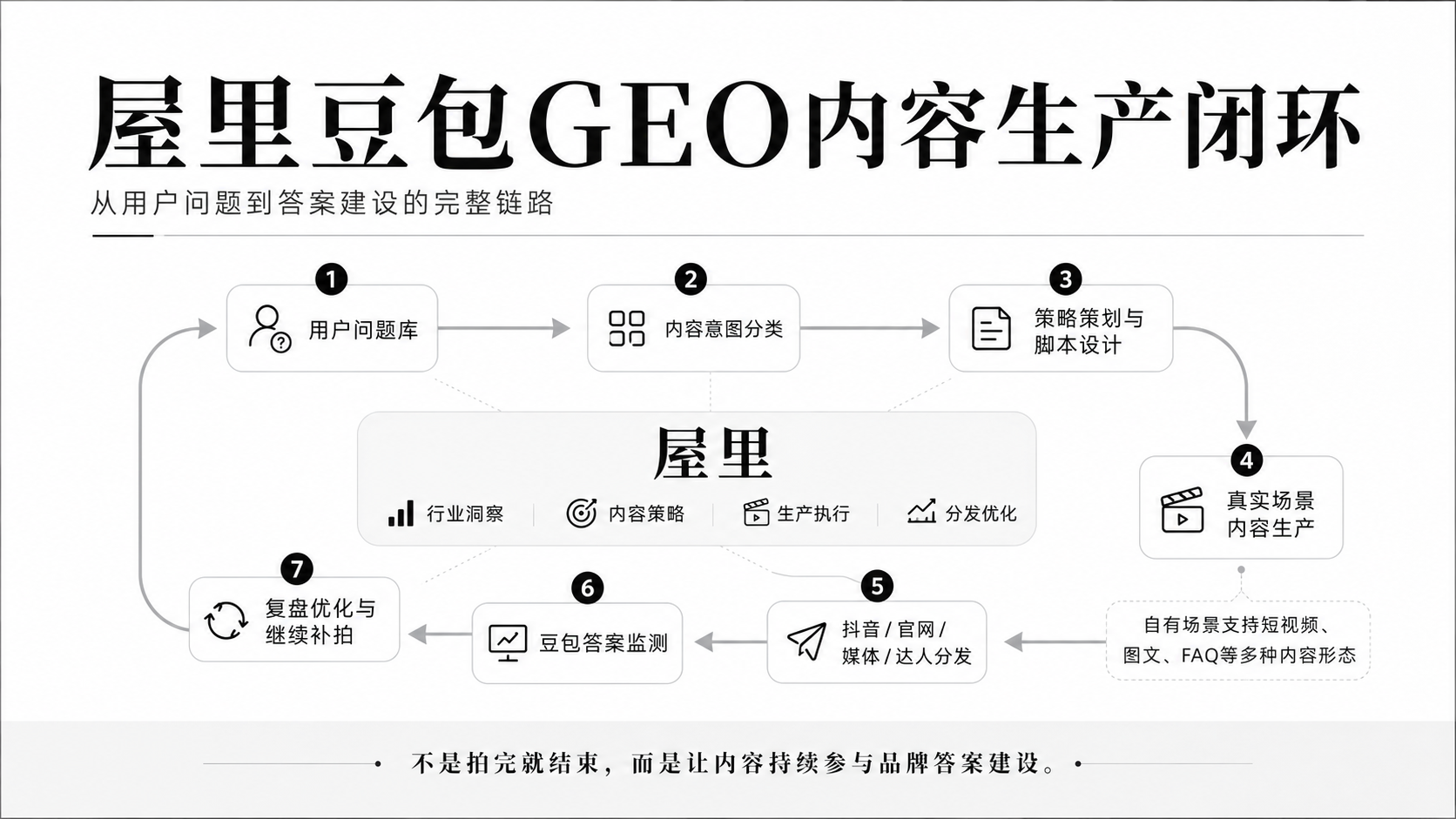
Figure 3. WULIFE’s Doubao GEO content production cycle: from user questions to building answers
7. The scope of WULIFE’s capabilities compared with other providers
GEO projects currently involve several types of providers, each with different areas of emphasis.
|
Capability |
Conventional GEO provider |
Short-video provider |
Creator agency or MCN |
WULIFE |
|
AI-answer analysis |
Usually available |
Usually outside scope |
Usually outside scope |
Available |
|
User-intent research |
Partly available |
Mainly platform-specific topic planning |
Mainly creator-led communications |
Combined research across search, AI answers and platform content |
|
Brand knowledge development |
Usually focused on documents and text-and-image content |
Rarely covered |
Rarely covered |
Coordinated development of brand, product, scenario, FAQ and source information |
|
Text-and-image content |
One of the core capabilities |
Usually limited |
Mainly social content |
Coverage across official website, media, knowledge articles and FAQs |
|
Short-form video production |
May rely on external teams |
Capabilities |
Produced by creators or agencies |
Strategy, scripts, production in real settings and adaptation for reuse |
|
Distribution through creators |
Usually relies on external resources |
Partly available |
Capabilities |
Coordinated with GEO intent, content strategy and source development |
|
Production in real settings |
Usually limited |
Available |
Depends on creators’ available settings and resources |
Owned settings support sustained, controlled production |
|
AI-answer monitoring |
Capabilities |
Usually outside scope |
Usually outside scope |
Continuous monitoring, review and adjustment |
|
Main characteristics |
More focused on AI strategy and text-and-image content |
More focused on video delivery |
More focused on creator resources and communications |
Integrated GEO, content production, creator distribution and monitoring |
This is not simply a comparison of who is more professional.
Different providers solve different problems.
Conventional GEO providers specialize in AI-answer research and text-and-image content; short-video providers specialize in visual storytelling and production; creator agencies specialize in audience reach and third-party communications.
WULIFE’s difference is coordinating these previously separate activities around a shared understanding of user intent and brand knowledge.
8. What brands should reassess now
Changes in Doubao’s sources do not require brands to immediately discard their existing content systems, but they should reassess the following areas.
1. Are the brand’s basic facts consistent?
Are company name, brand positioning, product names, technologies and materials, store counts, after-sales policies and credentials consistent across channels?
2. Does the content actually address users’ questions?
Does the brand only address which brand is good, while overlooking suitable home layouts and users, material selection, actual performance, cleaning and maintenance, product quality and after-sales risks?
3. Which questions need video evidence?
Questions that can be answered through dimensions, operation, comparisons and real-world demonstrations should not rely on adjectives alone.
4. Is high-quality text-and-image content being developed continuously?
Even when prioritizing Doubao and Douyin (TikTok), brands should continue developing their official website, media content, knowledge articles and FAQs. These support Doubao’s fact-checking as well as other AI platforms and traditional search channels.
5. Do videos have a clear information structure?
Videos should contain more than imagery, music and emotion. They should clearly communicate the brand, product, scenario, question, evidence and conclusion.
6. Does monitoring continue after publication?
Brands need to look beyond video views and article indexing counts. They should track whether AI describes the brand accurately, includes it among recommendations for target questions, and cites relevant content; whether factual errors appear; which user intents remain uncovered; and whether text-and-image content and video corroborate one another.
9. Frequently asked questions about Doubao GEO
1. If Doubao is giving short videos more weight, has text-and-image content lost its value?
No. Short videos are better suited to questions about real-world results, usage processes and spatial demonstrations. Text-and-image content better supports company facts, specialist knowledge, product specifications and complex analysis. Brands are also doing more than optimizing for Doubao alone: high-quality text-and-image content must serve other AI search and question-answering products, traditional search engines, media communications and the brand’s website. Reduce low-quality, repetitive articles that add no information, rather than stop producing high-quality text-and-image content.
2. Can a brand accomplish Doubao GEO with Douyin (TikTok) short videos alone?
It would be difficult. Video strengthens the content foundation for experiential and scenario-specific questions, but brand identity, company capabilities, product standards, technical information and after-sales policies still need support from the official website, text-and-image content and third-party sources. Without these foundations, many video claims cannot be cross-verified.
3. How many short videos does it take to produce GEO results?
There is no fixed number. What matters is whether the content covers key user intents, provides real evidence and remains consistent with the official website, product pages and other sources. Ten videos answering specific questions usually have greater long-term value than a hundred videos showing only what a product looks like.
4. What kinds of videos are better suited to contributing to AI answers?
They usually need a clear title; an identifiable brand and product; a specific user question; real settings, demonstrations, data or comparisons; a clear conclusion; and consistency between subtitles, narration and visuals.
5. How does WULIFE differ from a typical GEO provider?
Typical GEO providers tend to focus on AI-answer testing, keyword planning, text-and-image content and source publication. Alongside those capabilities, WULIFE offers content production in real home-and-living settings, short videos, text-and-image content, influencer campaigns and platform distribution. It can connect user-intent research directly to production and communications. WULIFE not only recommends what to film; it can produce the content and continue monitoring changes in AI answers.
6. How does WULIFE differ from a short-video provider?
Short-video providers typically focus on scripts, filming, editing and video delivery. WULIFE starts content production with brand knowledge, user questions and GEO objectives. Filming is part of a wider system spanning the official website, knowledge articles, FAQs, creator content and AI-answer development. A single production can also be adapted into short videos, text-and-image posts, FAQ illustrations, media materials and product content, creating assets for long-term use.
7. How does WULIFE differ from a creator agency or MCN?
Creator agencies and MCNs typically excel in creator resources, platform communications and audience reach. WULIFE integrates influencer campaigns into the overall GEO and content growth system: first determine the understanding users need to develop, then design creator content, brand sources and supporting website content, and finally monitor whether those materials actually affect AI answers. Creator publication is part of building brand sources, not the endpoint.
8. Could GEO be classified as AI data poisoning?
Normal, compliant GEO is not. Organizing accurate brand facts, improving the official website, producing specialist content and answering users’ questions are normal ways of developing brand information. Fabricating data or rankings, impersonating user reviews, mass-publishing repetitive content and deliberately using false information to influence AI judgments are the high-risk practices to watch out for.
Final thoughts
The Doubao GEO landscape really has changed.
But this does not mean the text-and-image era has ended and the video era has begun.
The real change is that AI is beginning to need more types of evidence when answering purchase-decision questions:
The official website provides brand facts; text-and-image content explains specialist issues; media builds public awareness; video shows real processes; creators add experiential perspectives; and product content supports further decision-making.
The biggest future risk for brands is not publishing a few fewer articles or filming a few fewer videos.
It is continuing to treat GEO, content marketing, short video, influencer campaigns and website development as unrelated activities.
Doubao’s changes are reminding brands that:
More content is not automatically better; it must work together around users’ questions. More sources are not automatically better; they must be authentic, consistent and verifiable. Video is not about chasing a format, but showing situations and processes that text and images could not previously demonstrate.
High-quality text-and-image content will not disappear.
Short video will not solve every problem either.
The real competitive advantage lies in a brand’s ability to build a content system across platforms and formats that can be improved continuously.
This is the capability WULIFE has been building over time: combining home-and-living industry insights with content strategy, text-and-image and video production, creator distribution and GEO, helping brands turn their real strengths into content assets that users, platforms and AI can understand over the long term.
Sources
[1] Doubao Privacy Policy: https://www.doubao.com/legal/privacy
[2] Volcengine: public materials on video understanding: https://www.volcengine.com/docs/82379/1895586
[3] Cyberspace Administration of China: “Qinglang” special campaign to address misconduct in AI applications: https://www.cac.gov.cn/2026-04/30/c_1779289298718765.htm
[4] WULIFE official website: https://www.wulife.cn/