How to run your business on Doubao: from users’ questions to product delivery
How do you run your business and e-commerce operations on Doubao? It takes sustained work. A single citation is an interim achievement; remaining part of users’ purchase decisions requires steady, continuous content development.
Topics
1Summary
How do you run your business and e-commerce operations on Doubao? It takes sustained work. A single citation is an interim achievement; remaining part of users’ purchase decisions requires steady, continuous content development.
How to run your business on Doubao: from users’ questions to product delivery
When a user asks Doubao how to choose a dining table for a small dining area that saves space day to day but seats guests when needed, the real concerns may be whether it fits in everyday use, seats enough people when extended, leaves room to walk after chairs are pulled out, and is easy to extend and retract.
One question already contains requirements about space, number of users, frequency of use and ease of operation.
Merchants therefore need more specific product information and content. Descriptions such as ‘space-saving’ and ‘flexibly extendable’ are not enough to help users decide. Dimensions when closed and extended, whether the legs interfere with seating, and whether chairs can be tucked away properly are the details directly relevant to the choice.
WULIFE specializes in the home-and-living sector and has worked across furniture, kitchen appliances, dishwashers, robot cleaners and other categories. In our GEO and content growth work, we consistently focus on one thing: Can users’ questions be answered fully through the brand’s product information, content and actual service?
Doubao-related tools in the Douyin (TikTok) Shop dashboard provide a way to observe this. Exposure, clicks, sales, refunds and the questions users ask before buying can be analyzed together.
Doubao operations can follow an end-to-end business process: understand demand, complete product information, continually build content around frequently asked questions, and adjust using citations, recommendations and business feedback.
1. Start with the dashboard: where do users stop, and what do they still ask before buying?
For merchants with access to the relevant features, information in the Doubao operations section can be grouped into three categories.
|
Information type |
What to examine |
How it supports operations |
|---|---|---|
|
Business performance data |
Exposure, clicks, conversions, refunds and related metrics |
Observe the journey from product discovery to purchase and identify stages that need investigation |
|
Unmet-demand opportunity keywords |
Signals of user demand that was not matched with a suitable product |
Assess whether existing products can meet the demand and whether product information or content has gaps |
|
Key information for purchase decisions |
Questions users consider before ordering |
Identify what product pages, short videos and reviews should answer first |
Look for the relevant entry under ‘Compass → Doubao section’ or ‘Traffic Operations → Doubao Operations.’ Merchants without access to the dedicated section can also check ‘Compass → Transactions → Storewide Sales Analysis → Terminal Breakdown’ for sales already coming from Doubao. Actual entry points and available features depend on what appears in the store dashboard.
Even if Doubao currently accounts for less than 1% of a store’s sales, it is worth starting to record and analyze the channel. The questions are what demand it has brought, how much the store has fulfilled, and which issues remain unresolved.
What changed in the same store before and after an adjustment? Which products get exposure but few clicks? Which attract visits but no purchase? After a sale, which issues account for most refunds?
Start with one priority model and continuously record its exposure, clicks, sales and reasons for refunds. Also note what changed during that period: whether the main image presents a different usage scenario, the detail page adds key specifications or demonstrations, or prices and promotions have changed.
A review becomes meaningful when data is connected to actions.
If the product page, promotions and advertising all changed at the same time, a sales increase needs to be assessed alongside those factors. Clear records make it possible to identify which actions are worth continuing in the next round.
2. Turn users’ questions into answers they can find on product pages
A purchasing question often includes several requirements at once.
Consider again how to choose a dining table for a small dining area. Users need to know whether it fits day to day, meets everyday needs, can be extended for guests and is easy to operate.
After receiving unmet-demand opportunity keywords and pre-purchase questions, we first match products to needs, then plan content:
Step one: confirm that the product genuinely suits the need.
Step two: check whether the product page explains the relevant information clearly.
Step three: identify which questions need further explanation through images, video, real-world experience or professional reviews.
For extendable products, ‘suitable for small homes’ needs to be supported by specific information:
- Dimensions when closed and extended.State the actual dimensions in both everyday and extended configurations so users can compare them with the space at home.
- Table-leg and seating layout.Show the leg positions, seating arrangements and conditions of use in each configuration for the specific model.
- Space requirements during use.Beyond the table’s footprint, show the space needed to pull chairs out, sit down and stand up, so users can assess whether it works in practice.
- The extension and retraction process.Show every step of extending and retracting the table, explaining the operation and any points that need attention.
The product page provides specifications, dimension drawings explain spatial relationships, real-world images show actual placement, and video demonstrates the complete operation. Users should also see the real situation with chairs pulled out and people sitting down and standing up.
‘Suitable for small homes’ is a conclusion. Dimensions, layout and usage demonstrations are the evidence supporting it.
Unmet-demand opportunity keywords should be handled accordingly. A mismatch between product specifications and demand belongs in product selection or planning. If a product meets the need but is poorly explained, prioritize improving its page and content.
Check product pages and external content together. Dimensions, suitability conditions and service information for the same model should remain consistent across articles, videos and product pages. If a video shows the extended table, the product page should provide the matching dimensions and instructions so users can continue evaluating it.
3. Build four types of assets together, with content assets at the center
In WULIFE’s approach, product operations, content supply, professional evidence and ongoing updates belong within the same workflow.
Product pages provide basic information, user experiences show actual performance, specialist content explains the basis for judgments, and store reviews and fulfillment feedback help verify whether promises have been kept.
Along this process, brands need to develop four types of assets continuously.
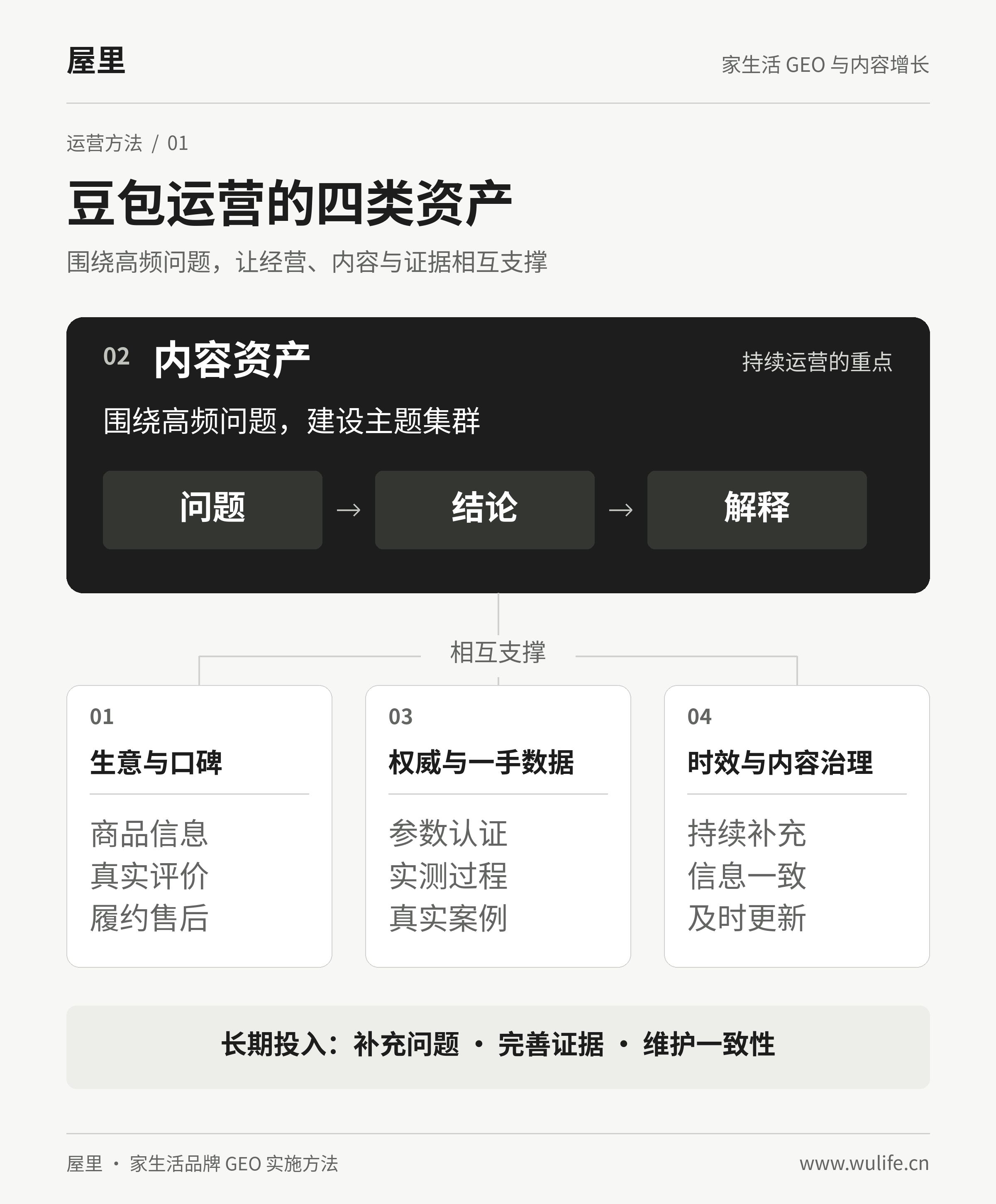
Figure 1: Four types of assets for Doubao operations. All four support operations, while content assets require continuous development around frequently asked questions.
Type one: business performance and reputation—build a solid operating foundation
Product sales, user reviews, reliable shipping and installation, and resolution of after-sales issues are all essential operational responsibilities.
For furniture and appliance brands, the purchase experience often extends through delivery, installation and use. Clear product pages are only the first step; actual service needs to match.
Product dimensions, package specifications, delivery coverage, installation arrangements and after-sales policies should all match actual fulfillment. Conditions users must confirm in advance and included services should also be explained before purchase.
The stronger these foundations, the more reliable facts later content can communicate. Genuine reviews and usage feedback also provide ideas for future topics.
Type two: content assets—build topic clusters around frequent questions
Building topic clusters around frequent questions, using a consistent ‘question → conclusion → explanation’ structure, is the core area we can actively develop and manage over time.
In a GEO project for a dining-table and chair brand, WULIFE first aligned brand and product facts, organized a knowledge base and built a content-asset website. It then developed content around buying guides, materials and manufacturing, and brand recommendations.
This gave the brand profile, product information and subsequent content a shared foundation before organizing ongoing content around users’ actual concerns.
For topic planning, one purchasing need can be broken into a group of related questions. A cluster around the small-dining-area example could be organized as follows:
|
What users want to know |
What the content should explain |
Suitable content formats |
|---|---|---|
|
Should I choose a fixed or extendable table? |
How to balance everyday seating needs, guest frequency and available space |
Buying guides and scenario comparisons |
|
How can I tell whether it will fit at home? |
Closed and extended dimensions, plus space requirements with chairs pulled out |
Dimension drawings and real-space demonstrations |
|
How should seating be arranged when the table is extended? |
Leg positions, seating layout and conditions of use for the specific model |
Layout explanations and usage experiences |
|
Is it easy to extend and retract? |
The complete extension and retraction process, including precautions |
Hands-on demonstrations and operating videos |
|
What evidence should guide comparisons of brands and models? |
Product information, materials and manufacturing, supporting documents and service policies |
Comparison guides and brand Q&As |
These pieces address the same type of need. Each answers a specific question; together they help users make a choice.
Each individual piece also needs a clear structure. For example:
Question: what should I check first when buying an extendable dining table for a small dining area?
Conclusion: first check whether the closed table meets everyday needs, then whether the space works when it is extended and the chairs are pulled out.
Explanation: show the actual dimensions, leg layout, seat positions and extension process for the specific model so users can assess it against their own space.
This structure works directly in articles, short videos, product details and FAQs. Answer the user’s question early, then explain the evidence behind the conclusion.
Content roles should also be clear. Real users or KOCs show specific experiences and usage details; professional creators or KOLs provide deeper structural analysis, comparisons and long-term observations; product pages supply accurate specifications and service information.
As a planning starting point, we recommend that at least 40% of the content mix include material such as real-world photos or demonstration videos, prioritizing dimensions, construction, installation and operation.
One piece answers one main question; a group of pieces covers a complete decision topic. Useful content assets emerge through sustained accumulation.
Type three: authority and first-hand data—give conclusions an evidence base
Persuasive content needs material that can be checked.
Product specifications, test reports, certifications, hands-on test procedures, actual use cases and long-term experiences can all support content. The experience, expertise, authoritativeness and trust emphasized by E-E-A-T should be demonstrated through these concrete materials.
During content review for the project described above, we checked the product models and key information in the articles and aligned descriptions of manufacturing processes, product features and services to reduce discrepancies.
This work directly affects whether content can be reused over time. If a specification differs between a product page, an article and a video, maintenance costs rise as more content is added.
For materials and manufacturing, check company knowledge documents, product instructions and supporting evidence. For spatial suitability, use the dimensions and real-space demonstrations for the specific model. For operating experience, state the conditions and full process. For service assurances, check the actual terms.
We pay particular attention to these relationships:
Dimensions must match the specific model, performance the test conditions, installation the service coverage, and after-sales service the actual policy.
When every important judgment is supported, content can withstand users’ follow-up questions and is easier for search and AI question-answering systems to understand and cite accurately.
Type four: freshness and content governance—capture citation opportunities and keep content maintained
In content operations, we treat the first 1–2 months after publication as a priority window for pursuing crawling and citations.
During this period, provide a concentrated body of evidence-based content around core questions, complete related product information and supporting documents, and track which topics receive citations and which questions still lack effective answers.
For example, after publishing a buying guide on the topic above, add explanations of dimensions, seating layout, extension mechanisms and frequently asked questions. Each piece should contribute new information while keeping product facts and service descriptions consistent.
This priority window calls for focused effort, followed by ongoing maintenance. Update related content promptly when specifications, prices, promotions or service policies change, and add answers when users raise new questions.
Also check that content is accessible and displays correctly. Avoid low-quality repetition, mass paraphrasing of existing material, and conflicting specifications or promises across accounts.
Publication marks the beginning of sustained content development.
4. Diagnose each stage: exposure, clicks, sales and refunds
Content development and business feedback need to inform one another.
Exposure, clicks, sales and refunds reflect different stages of the journey. An unusual metric can suggest where to investigate, but one number alone cannot establish the cause.
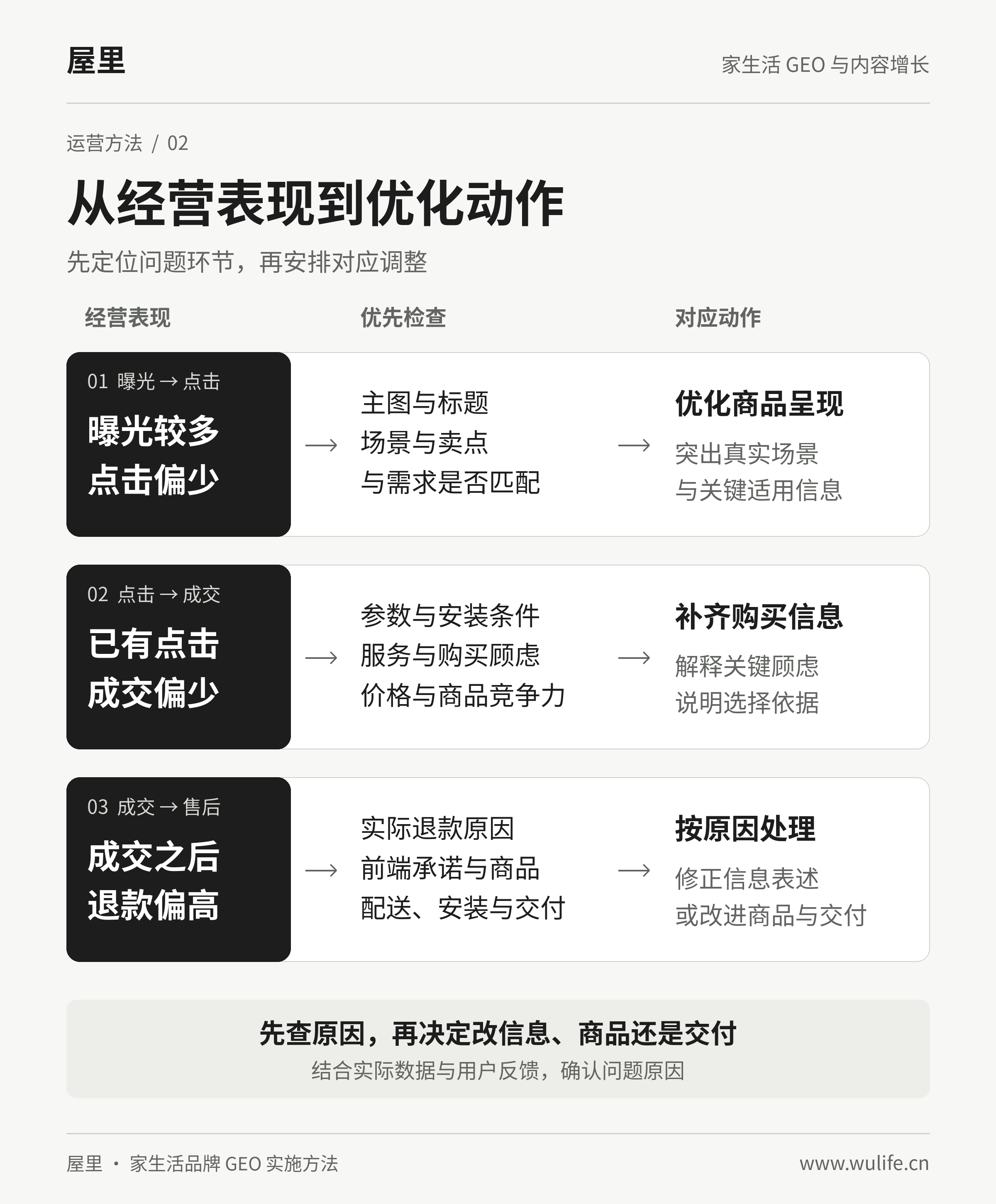
Figure 2: From business performance to optimization actions. Performance provides diagnostic clues; user feedback helps determine the specific action.
High exposure, few clicks: check the first information users see
Are the main product image, title and key selling points relevant to the user’s question? Can users quickly judge whether the product might suit them?
Returning to the small-space example: if the main image only shows the table in a large dining room and the title omits key dimensions and features, users will struggle to tell at a glance whether it fits their home.
We would first check whether the main image needs a closed-versus-extended comparison, whether the title clearly conveys product features, and whether key suitability conditions are prominent enough.
After making adjustments, observe the click performance of the relevant products.
Clicks but few sales: check whether purchase concerns are answered
After opening a product page, users may still wonder whether the extended table takes up too much space, seating is suitable, operation is convenient, and how delivery into the home and installation are arranged.
If pre-purchase inquiries repeatedly focus on these issues, prioritize dimensions, layout illustrations, operating demonstrations and service information for the specific model.
Appliance purchases face similar barriers. For example, if dishwasher shoppers repeatedly ask whether the unit fits their existing cabinets, requires alterations or includes installation services, prioritize installation requirements and service information.
Each change should address a real concern, followed by observation of the results.
Resolving pre-purchase questions one by one gives product-page optimization a clear direction.
High refunds after purchase: compare promises, product and fulfillment
If refunds center on unsuitable dimensions, check that page specifications, presentation and delivered products agree. If transport damage is the issue, review packaging and delivery. If actual use falls short of expectations, compare the sales descriptions with the product’s real performance.
Different causes require different responses.
Feed recurring after-sales issues back to product-page and content teams, adding the information users need before purchase. Content helps set accurate expectations; actual fulfillment delivers on promises. Both need to improve together.
5. Doubao operations require sustained work: keep building after a citation
Doubao operations require sustained work. A single citation is an interim achievement; remaining part of users’ purchase decisions requires steady, continuous content development.
In WULIFE’s furniture project described above, some new content received citations relatively quickly, but inclusion in recommendations for broad product categories still required ongoing work.
That experience clarified our priorities: align brand facts first to give content a sound basis, then continually cover frequent intents and monitor the brand’s performance in recommendation queries.
Correct understanding of brand facts, content citations and inclusion in category recommendations are separate milestones to track. After basic information is established, brands still need useful content around category recommendations, selection criteria and usage scenarios.
Long-term operations involve four specific tasks:
- Keep expanding useful question coverage.Add new scenarios, concerns and selection questions based on pre-purchase inquiries, platform feedback and business data.
- Keep strengthening the evidence behind content.Build up hands-on tests, real experiences, installation cases and usage feedback to support existing conclusions more fully.
- Keep existing information maintained.Promptly update changing specifications, prices, promotions and service promises, keeping all content consistent.
- Keep monitoring citations and recommendations.Record brand appearances, accuracy of descriptions and consistency of recommendations for priority questions to guide the next round of investment.
Brands need not wait until everything is in place. They can begin with one priority category and a group of frequent questions, strengthen product information and content, then expand gradually.
For resource allocation, we prioritize the following order:
Douyin (TikTok) e-commerce operations > High-quality content supply > Standalone GEO services.
Complete product information, addressed review feedback and reliable fulfillment give content a sound factual foundation. Continuous real-world footage, reviews and specialist explanations around user questions then give GEO enough information to organize and present.
In WULIFE’s view, GEO for home-and-living brands means turning product strengths into reasons to buy that users can understand, content can substantiate and actual delivery can fulfill.
This takes sustained development. More accurate content, deeper question coverage and stronger real-world evidence put a brand in a better position to remain part of users’ choices.
Frequently asked questions
1. Can I start GEO without a Douyin (TikTok) Shop or access to the Doubao operations section?
You can begin by organizing brand knowledge, improving product information and building content around frequent questions. This lays the groundwork for later search, AI answers and platform content operations. Merchants with an existing Douyin (TikTok) Shop but no dedicated section can check the terminal breakdown in transaction analytics for relevant channel data. Product-card display, store support and transaction analysis depend on the store’s capabilities and platform availability. Prepare accurate information and valuable content first, then gradually strengthen the path to purchase and fulfillment.
2. Does a topic cluster mean repeatedly publishing many pieces about one question?
A topic cluster should cover different decision questions within the same need. It can address suitability, conditions of use, operating experience, maintenance requirements and service policies, with every piece adding new information. Product pages provide specifications; real-world images show settings; video demonstrates operation; specialist content explains the evidence behind judgments. To decide whether a piece is worth creating, ask which specific question it answers, what information it adds and how it differs from existing content. A complete cluster emerges when the pieces complement one another.
3. What should be prioritized in the first 1–2 months after publication, the key window for crawling and citations?
We treat this period as a focused effort to secure crawling and citations: continually publish around core topics, complete product pages and evidence, keep information consistent across channels, and record appearances and citations for priority questions. After a guide is published, add its related specification explanations, demonstrations, expert analysis and FAQs so the topic has sufficient supporting information. Beyond this window, maintain content as products, user questions and citation performance change.
4. If Doubao already cites my content, should I keep working on it?
Yes. A citation means a particular piece was used in a particular answer. You still need to track whether the brand is understood accurately, included in relevant recommendations and represented consistently over time. Users ask new questions, products and services change, and new content appears on the same topic. Brands should keep adding useful information, maintaining existing content and monitoring priority questions. In WULIFE projects, gaining a citation and remaining part of users’ decisions are separate objectives; the second still requires long-term investment after the first is achieved.
5. How can I tell whether Doubao operations are working?
Observe three levels. First, whether content is cited and brand and product information is accurate. Second, whether the brand appears in recommendations for core categories, scenarios and purchasing questions, and how consistently. Third, where business data is available, how exposure, clicks, sales and refunds change. Keep using the same set of questions, platforms and entry points, while recording changes to content and product pages. Repeated observations corroborated by business feedback help identify effective work and the next priorities.
6. Can a professional team manage Doubao operations if we lack staff or experience?
Yes. If your team lacks staff, GEO experience or the capacity to produce content consistently, a professional team can help. Look for a provider that understands the home-and-living sector, can turn user questions into content topics, and defines deliverables and performance tracking clearly. WULIFE can support brand knowledge organization, planning around frequent intents and topic clusters, content production and campaigns, GEO and performance tracking. Contact us through the WULIFE website to discuss a suitable Doubao operations approach based on your products, existing content and team setup.